DebtCat: Building a No-BS First Aid Kit for People Drowning in Debt
How a former debt collection insider built an AI-powered platform to democratize debt knowledge and empower consumers with actionable tools to fight unfair collection practices.
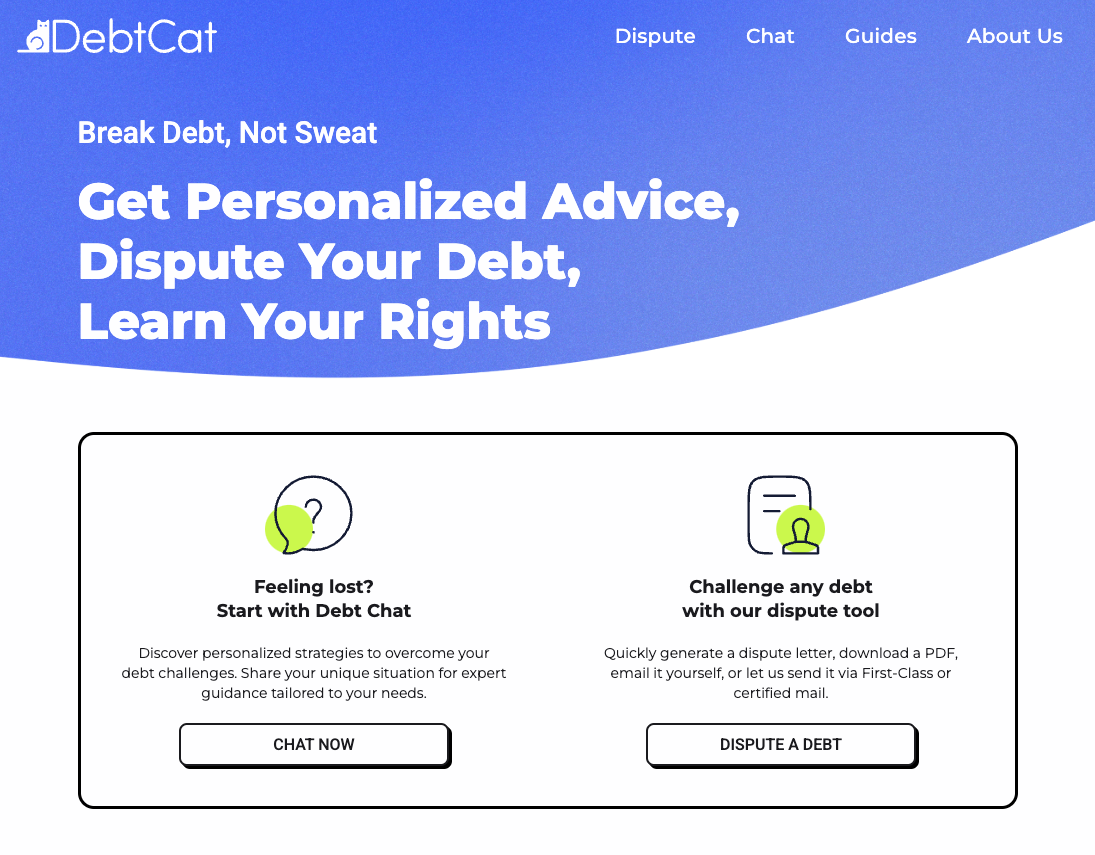
DebtCat's homepage emphasizing empowerment over intimidation
The Market Reality: Debt Collection is Fundamentally Unfair
The debt collection system is designed to exploit consumer confusion and shame. With insider knowledge from working in collections, we identified a massive opportunity to level the playing field.
Strategic Product Vision: Democratizing Insider Knowledge
Unlike typical fintech debt products, DebtCat deliberately avoids subscriptions, data collection, and generic advice. Instead, we built a "first aid kit" around three core pillars that founders can apply to any consumer empowerment product.
Education-First Approach
Clear, jargon-free guides about consumer rights that build trust before asking for any commitment.
AI-Powered Conversation
Intelligent chatbot that provides specific, actionable answers without requiring personal information.
Actionable Tools
Dispute letter generator that creates legally-sound communications without requiring legal expertise.
User Experience: Trust Through Transparency
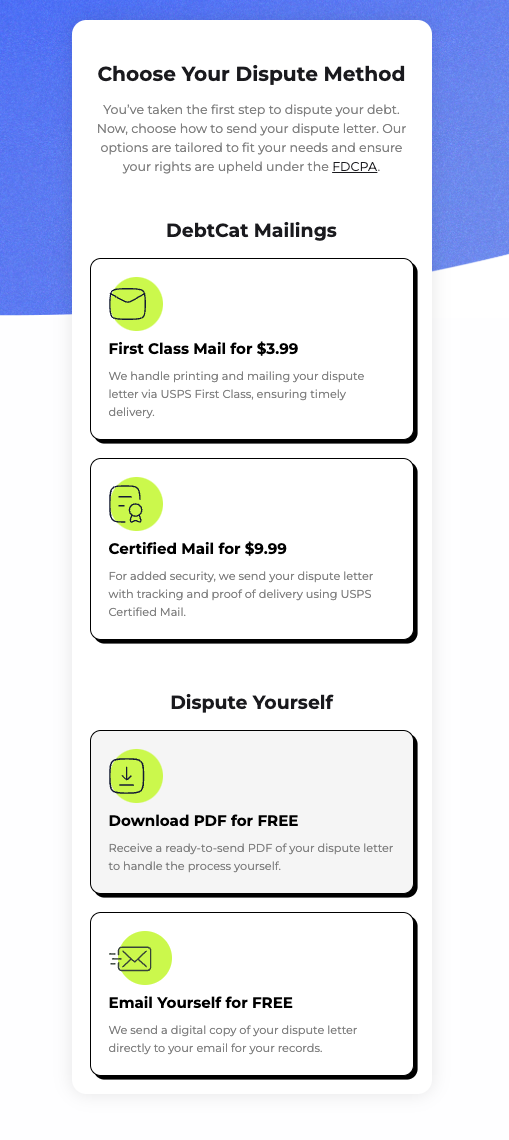
Dispute options page - clear choices without overwhelming users
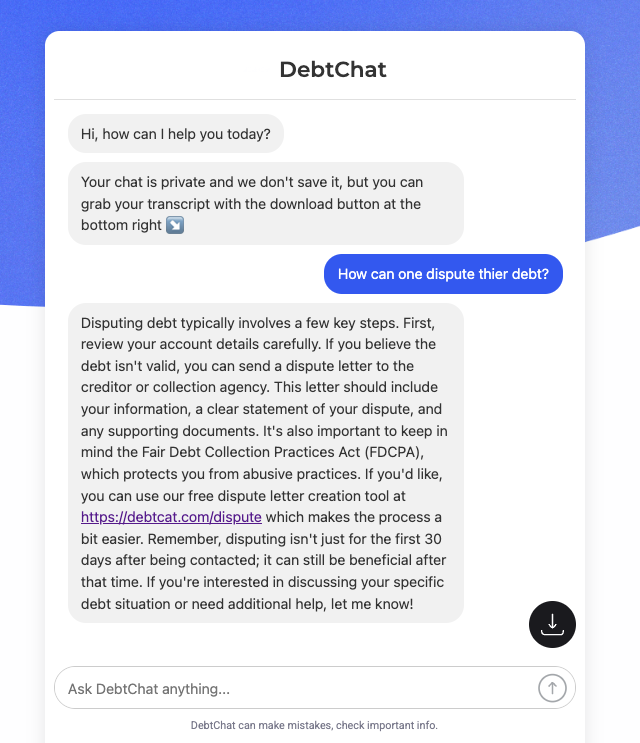
AI chatbot providing specific guidance without data collection
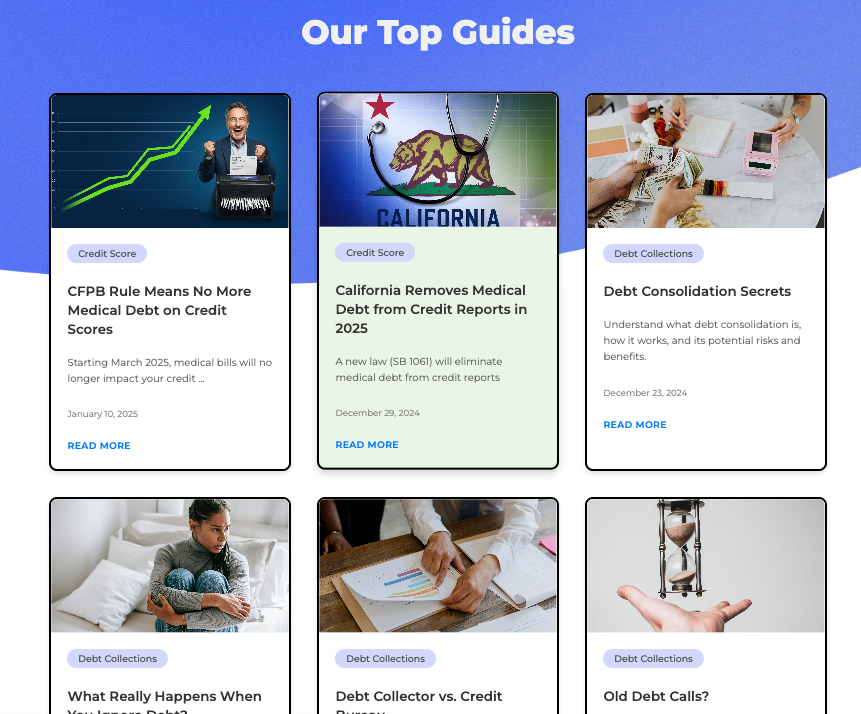
Comprehensive consumer guides building credibility through education
Technical Evolution: From WordPress to Firebase
DebtCat's journey through three tech stacks illustrates how early-stage products need technical flexibility to match evolving product requirements and resource constraints.
Phase 1: WordPress + Elementor
Strengths
- • Fastest time to market
- • Familiar CMS workflow
- • Content management built-in
Limitations
- • Design constraints
- • Performance issues
- • Limited customization
Phase 2: Webflow
Strengths
- • Superior design control
- • Visual editing interface
- • Professional aesthetics
Limitations
- • High costs at scale
- • Limited technical extensibility
- • Resource allocation concerns
Phase 3: Firebase (Current)
Strengths
- • Highly scalable
- • Cost-effective
- • Full developer control
Tradeoffs
- • Lost CMS functionality
- • Required component rebuilding
- • Technical debt accumulation
AI-Powered Development: Solo Founder Advantage
DebtCat demonstrates how AI tools enable non-technical founders to build sophisticated products without traditional development teams. This represents a fundamental shift in the founder-to-market equation.
AI Development Workflow
"AI didn't replace product thinking, but it removed the technical barrier to implementation. I could focus on 'what should we build?' rather than getting stuck on 'how do I write this code?'"
Founder Challenges: Credibility, Distribution & Technical Debt
Building Trust in a Predatory Market
The debt relief space is notorious for scams. Establishing credibility required refusing payment upfront, transparent pricing, and education-first approach.
Lesson: In sensitive markets, trust-building must precede monetization.
Distribution Roadblocks
Email providers and Google flagged debt-related content as potentially predatory, forcing reliance on social channels and community engagement over traditional growth tactics.
Lesson: Regulated industries require alternative distribution strategies from day one.
Technical Debt vs. Speed
Platform migrations broke styling and CMS functionality, requiring weekend rebuilds. The tradeoff between technical perfection and market speed became a constant balancing act.
Lesson: Early-stage products must prioritize learning over technical elegance.
Results & Strategic Roadmap
Current Achievements
- Free dispute letter generation without signup
- AI chatbot providing specific debt guidance
- Comprehensive consumer education library
- Zero-friction user experience
Strategic Roadmap
- Negotiation tools for direct collector communication
- Credit report integration for comprehensive debt view
- Expanded situation-specific content
- Ethical partnerships with reputable services
Strategic Insights for Founders
1. Insider Knowledge Creates Moats
Domain expertise reveals opportunities invisible to outsiders. Your unique background is often your biggest competitive advantage.
2. Tech Stack Should Follow Product Needs
Be ready to change technical direction when product requirements evolve, even if it means short-term inconvenience.
3. AI Democratizes Technical Implementation
Non-technical founders can now build sophisticated products, but only when the product vision is crystal clear.
4. Trust Precedes Monetization
In sensitive domains, establishing credibility is worth sacrificing short-term revenue opportunities.
5. Distribution Challenges Vary by Industry
Regulated industries require alternative growth strategies. Plan distribution roadblocks into your go-to-market strategy.
6. Education-First Builds Sustainable Moats
Teaching users creates deeper engagement and trust than transactional interactions, especially in complex domains.
Have a product like this in mind?
Tell me what you want to build. I plan it with you, build it in Next.js and launch it on your domain in under 3 weeks.
Start your project